How to Choose a Metabolic Supplement: A Buyer's Checklist
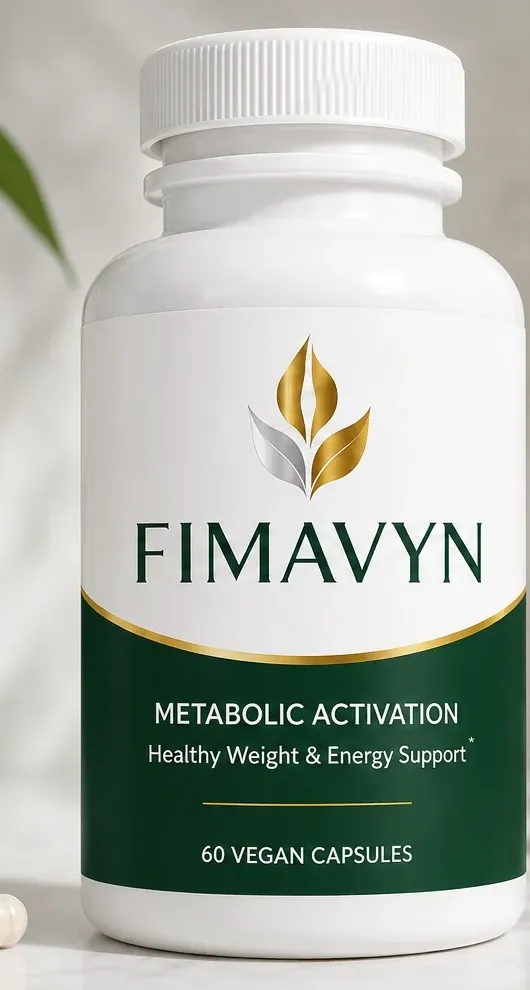
Written by the GoFimavyn editorial desk
Last updated · Who reviewed this page · How we write and review
Choose in order: your health first, then the label, the research and the seller. Show the label to your doctor if you take medicine, work out each active amount, and compare it with the lowest dose human studies used. Treat drug-like claims and web-only seals with care, and get price, refund and return terms before you pay.
How do you choose a metabolic supplement without guessing?
Work outward in a fixed order: your own health, then the label, then the research, then the seller. Each stage can rule a product out before you spend a cent.
No one screens these products for you first, because FDA does not approve supplements before sale (FDA, n.d.). This checklist puts that job in a simple sequence.
- Stage 1
You
Medicines, conditions, pregnancy and age come before any label.
- Stage 2
The label
Amounts, purity figures, blends and cautions.
- Stage 3
The research
Do the amounts match what human studies used, in people like you?
- Stage 4
The seller
Price, refund terms, return postage and a phone number.
- Stage 5
The bottle
Seal, label and lot code when the parcel arrives.
The Fimavyn buyer's checklist: twelve questions for any metabolic formula
The twelve Fimavyn checklist questions work on any metabolic supplement, in a store or online. Tick each one only when the label, the seller or your doctor confirms it.
An unticked box is not a verdict. It is a question to settle before you pay.
Before you buy, confirm: 0 of 12 checked
What does your own health rule out?
Your health can rule out a product before you read its label. The Fimavyn label, for example, excludes people under 18 and pregnant or nursing mothers, and asks anyone on medication to see a physician first.
The situations below call for a direct question to your doctor or pharmacist.
On diabetes medicine or insulin
Berberine, chromium, alpha lipoic acid and ginseng may add to these drugs (NCCIH, n.d.).
Taking several prescriptions
Berberine can interact with many drugs cleared by liver enzymes (MSKCC, n.d.).
On a blood thinner
High-dose resveratrol may add to bleeding risk (LPI, n.d.).
How do you read a metabolic supplement label? A Fimavyn worked example
Read the Supplement Facts panel in five passes, from the serving line down to the small print.
The steps work on any label. The example image shows them on one real panel.
- 1
Find the serving
Note how many capsules make one serving and how many servings the bottle holds.
- 2
Read each amount
List every ingredient with its mg or mcg, and its %DV where one exists.
- 3
Apply the purity figure
Multiply by any percentage: 150 mg of extract at 50% EGCG gives about 75 mg of EGCG.
- 4
Spot the blend
A proprietary blend shows one total. Divide it by the number of herbs to see the most each could average.
- 5
Read the small print
Check the cautions, the storage line and the asterisk that leads to the FDA disclaimer.
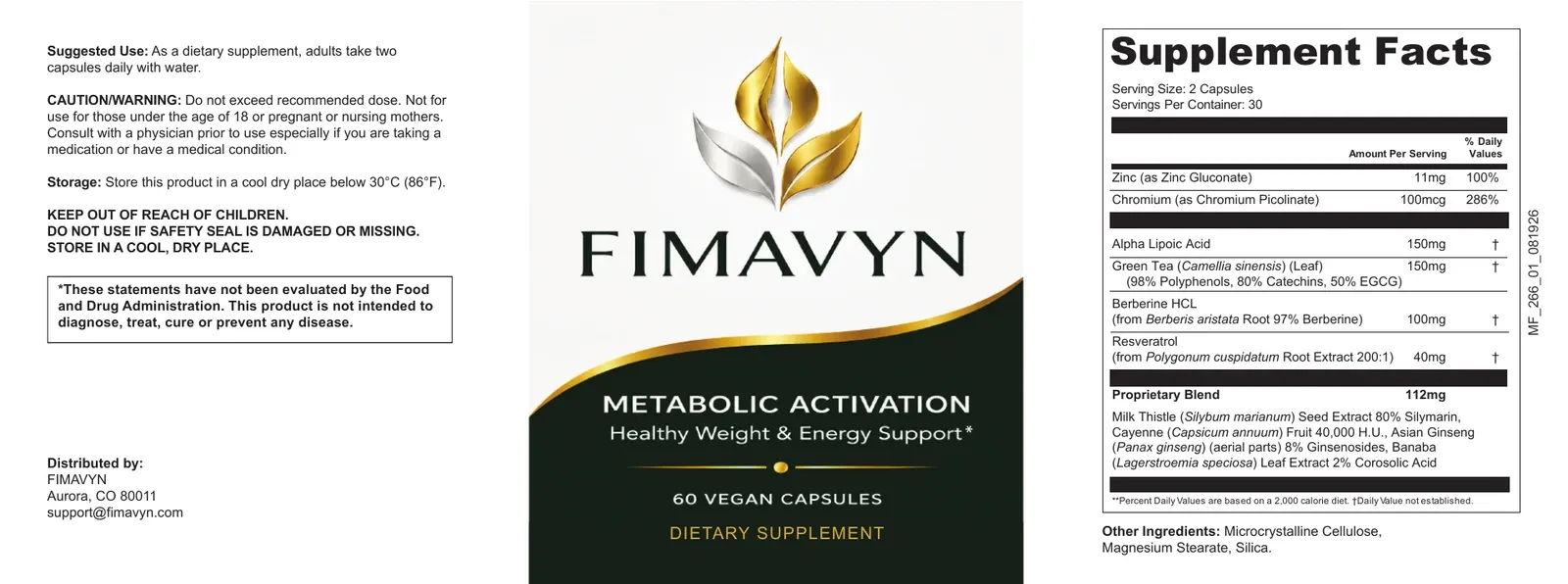
Zinc and chromium are the only lines with a %DV. Every other line shows a dagger, meaning no Daily Value has been set.
The supplement facts page walks through every line of this example.
Label amounts vs study doses: the Fimavyn arithmetic
Divide the active amount on the label by the lowest daily dose used in human studies. The result shows what share of a studied dose one serving gives.
The table runs that sum on a real label. The same arithmetic works on any bottle.
| Ingredient | Active amount per serving | Lowest studied daily dose | Share of that dose |
|---|---|---|---|
| Berberine | About 97 mg (100 mg at 97%) | 900 mg (Wang et al., 2024) | About 11% |
| Alpha lipoic acid | 150 mg | 600 mg (LPI, n.d.) | 25% |
| Chromium | 100 mcg | 137 mcg (Onakpoya et al., 2013) | About 73% |
| Resveratrol | 40 mg | 100 mg for a glucose change (Zhu et al., 2017) | 40% |
| Banaba | Not published (inside the blend) | 0.32 mg corosolic acid (Miura et al., 2012) | Cannot be worked out |
Check who was studied, too. Most berberine and resveratrol trials involved people with type 2 diabetes, so their results may not carry over to healthy adults. The metabolic support guide sets out each study.
Which claims and seals should make you look twice on Fimavyn or any label?
Any claim that a supplement treats, cures or works like a drug should stop you. Supplement labels may only make structure/function claims, such as “supports healthy weight”, with the FDA disclaimer attached (FDA, 2024).
Seals need a second look as well. Check whether a seal is printed on the bottle label itself or only on the seller's web graphics.
 Seller graphic; no GMP line on the label
 Describes a factory, not approval
 A refund promise, not a result
In the Fimavyn example, the GMP and FDA-facility seals are seller-supplied graphics, and the bottle label prints neither line. The red flags post lists more warning signs.
What should you ask the Fimavyn seller, or any seller, before you pay?
Ask about money, returns and contact before you enter a card number. A seller that answers all six questions in writing is easier to deal with if something goes wrong.
Here is how the Fimavyn seller's published terms answer them.
| Question | The Fimavyn answer |
|---|---|
| What is the full price? | Shown only at the secure checkout |
| What does shipping cost? | $9.99 on 1 bottle; free on 3 and 6 bottles (continental U.S.) |
| How long is the refund window? | Minimum 60 days on the sales page |
| When does the window start? | Not published; confirm at checkout |
| Who pays return postage? | The buyer, by a tracked service |
| Who do I call? | Order support +1 (302) 200-3480 |
Delivery times and whether any billing repeats are not stated in the seller's materials, so ask the order desk. The guarantee page sets out the refund steps.
How does Fimavyn measure up on this checklist?
Fimavyn does well on openness and seller contact but falls short on dose. Most of its amounts are printed, yet several sit well below the research ranges, and no trial has tested the finished formula.
Weigh the three groups below against what you want from a supplement.
Clear
Six full amounts, vegan capsules, support-only claims with the FDA disclaimer, and a phone desk with a returns address.
Unclear
Four herb amounts in the blend, the refund start date, delivery times and an independent lab report.
Below research
Berberine at about 97 mg and alpha lipoic acid at 150 mg, far under studied doses.
What should you check when the bottle arrives?
Check the seal, the label and the lot code before the first capsule. A damaged seal is a reason to call the seller rather than open the bottle.
Run through these points on delivery day:
- The safety seal is intact and present
- The label matches what you ordered: count, serving size and amounts
- A lot or batch code is printed, and you have noted it
- Your order email, with its order ID, is saved
- The bottle has a cool, dry home below 86°F
The batch verify page shows what can and cannot be checked from a lot code.
Choosing a metabolic supplement: common questions
Questions people type into Google and Bing, answered from the label and the sources on this page.
What is the first thing to check before buying a metabolic supplement?
Check yourself, not the bottle. List your medicines and conditions and show them to a doctor or pharmacist, because several common metabolic ingredients add to blood-sugar drugs.
How do I use the percentages printed next to an extract?
Multiply the extract weight by the percentage. For example, 100 mg of an extract at 97% purity gives about 97 mg of the active compound.
Is a proprietary blend always a bad sign?
Not always, but it is a blind spot. The blend shows only a total, so you cannot match any one herb to a study dose. A small blend beside fully listed amounts hides less than an all-blend label.
Does a seal saying FDA-registered facility make a supplement safer?
No. Registration only tells FDA where a product is made. FDA does not issue registration certificates, so the seal is not an approval (FDA, n.d.).
Is a long money-back window a sign the product works?
No. A refund window protects your money, not your health. It tells you nothing about what a formula does.
Why can a %DV go far above 100%?
A Daily Value is a reference amount, not a limit. Chromium, for example, has no upper limit set (NIH ODS, n.d.), so 286% DV is not a warning on its own.
Is a stimulant-free metabolic supplement a better choice?
It can suit people who react to caffeine. Check whether the label lists caffeine, and ask the seller about tea extracts, whose caffeine content is often not stated.
How many new supplements should I start at once?
One. Starting a single product makes it easier to tell what caused any change, good or bad.
Should I trust a supplement that compares itself to a prescription drug?
Be wary. FDA has found hidden drug ingredients in many weight-loss products (FDA, n.d.), and drug-like promises often travel with them.