The Metabolic Support Guide: Ingredients, Evidence and Safety
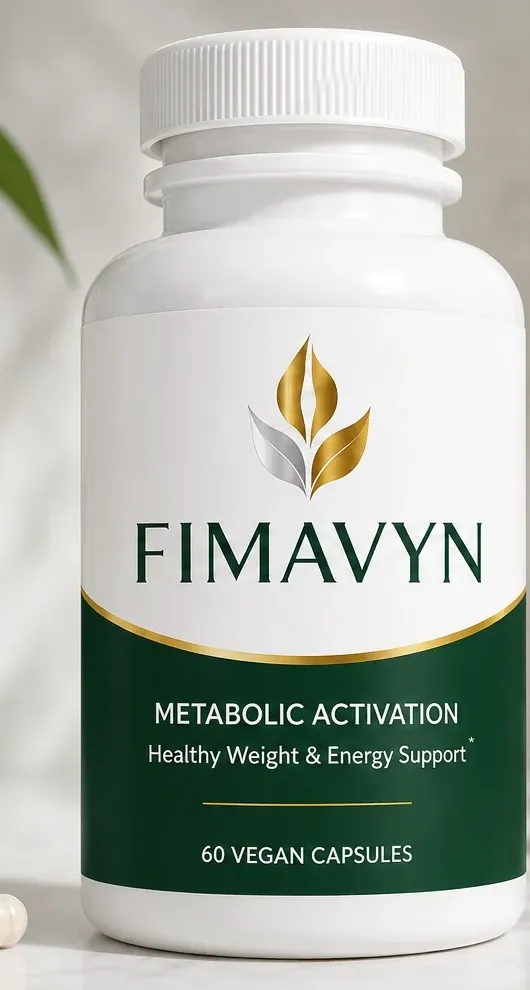
Written by the GoFimavyn editorial desk
Last updated · Who reviewed this page · How we write and review
Metabolic support supplements make structure/function claims that FDA does not pre-approve. Berberine and chromium have the most blood sugar data, mainly in type 2 diabetes and at doses of 900-1,500 mg and 200 mcg or more. Weight effects were small: about 0.5-1.3 kg. Several ingredients can add to diabetes drugs.
What does “metabolic support” mean on a supplement label?
“Metabolic support” is a structure/function claim. It says a product supports a normal body process, and the law bars it from claiming to treat a disease (FDA, n.d.).
Claims like this are not checked by FDA before sale, so the label must add the line saying FDA has not evaluated them (FDA, 2024). The claim tells you what the maker hopes for, not what a trial proved.
Formulas sold this way usually mix three groups of ingredients. Some were studied for blood sugar, some for weight or energy use, and some are plain nutrients such as zinc.
Who checks a metabolic supplement like Fimavyn before you buy it?
Nobody approves it first. FDA does not approve dietary supplements for safety or effectiveness before they reach shelves (FDA, n.d.).
Factories that make supplements must register with FDA (FDA, n.d.), but FDA issues no registration certificate, so “FDA registered” is not an approval (FDA, n.d.).
No FDA approval step for safety or effectiveness. The label claims are not checked either.
Registration tells FDA where a product is made. It says nothing about whether the product works.
FDA acts on problems it finds. It lists more than 150 weight-loss products with hidden drugs (FDA, n.d.).
Ten metabolic ingredients in Fimavyn and similar formulas: what studies found
Ten ingredients turn up again and again in metabolic formulas. The table pairs each one with the daily dose human studies used and the main finding.
Read the dose column first. A finding only carries over to a product that holds a similar amount.
| Ingredient | Daily dose studied | Main finding |
|---|---|---|
| Berberine | Mostly 900-1,500 mg a day, 1-3 months | Lower fasting glucose in type 2 diabetes; trials often small (Wang et al., 2024) (Dong et al., 2012) |
| Chromium | 137-1,000 mcg a day | About 0.5-1.1 kg more weight loss than placebo (Onakpoya et al., 2013) (Tian et al., 2013) |
| Alpha lipoic acid | 600-1,800 mg a day | About 1.27 kg more short-term weight loss (Kucukgoncu et al., 2017) (LPI, n.d.) |
| Green tea catechins | 141-1,207 mg a day, about 12 weeks | Small, non-significant weight change (Jurgens et al., 2012) |
| Resveratrol | 8-3,000 mg a day | Fasting glucose fell only at 100 mg+; HbA1c unchanged (Zhu et al., 2017) |
| Capsaicinoids | 0.2-33 mg | About 74 fewer calories at one meal (Whiting et al., 2014) |
| Banaba | 0.32-10 mg corosolic acid, 2 weeks | Lower glucose in a few small, short studies (Miura et al., 2012) |
| Milk thistle | Not set | Limited evidence; may help blood sugar in type 2 diabetes (NCCIH, n.d.) |
| Asian ginseng | Not set | Blood sugar evidence inconclusive (NCCIH, n.d.) |
| Zinc | RDA 8-11 mg | An essential nutrient, not a weight ingredient (NIH ODS, 2026) |
Which metabolic ingredients have the strongest blood sugar evidence?
Berberine and chromium have the most data, and nearly all of it comes from people with type 2 diabetes. In that group, chromium lowered HbA1c by about 0.55%, with bigger effects above 200 mcg a day (Suksomboon et al., 2014).
Berberine alone lowered fasting glucose, insulin resistance and some blood fats across 18 trials, with stomach pain the side effect noted (Ye et al., 2021). Many of those trials were small and of low quality (Dong et al., 2012).
Pooled trials in diabetes
Berberine and chromium. Real but modest changes, at doses most labels do not reach.
Small or short studies
Resveratrol, banaba and milk thistle. Few people, short runs, mixed results.
Unclear for blood sugar
Asian ginseng. NCCIH calls the evidence inconclusive.
Do metabolic supplements help with weight?
Not by much. NIH reviewers found that chromium, green tea and capsaicinoids give small effects at best, of doubtful clinical value (NIH ODS, n.d.).
NIH's consumer advice adds that there is little evidence weight-loss supplements work, and they can cost a lot and interact with medicines (NIH ODS, 2021).
Green tea's effect was small enough to be chance and unlikely to matter clinically (Jurgens et al., 2012). Even the largest number here is under 1.5 kg, reached over weeks or months.
Which metabolic ingredients, including those in Fimavyn, can clash with medicines?
Several common ingredients can add to diabetes drugs or affect other medicines. The table names the medicine group to raise with your doctor or pharmacist for each one.
The side effects page covers each risk in more depth.
| Ingredient | Ask about | Source |
|---|---|---|
| Berberine | Diabetes drugs and many drugs cleared by liver enzymes; not in pregnancy or breastfeeding | (MSKCC, n.d.) |
| Chromium | Insulin and diabetes medicines | (NIH ODS, n.d.) |
| Alpha lipoic acid | Insulin and diabetes pills; linked to low blood sugar | (MSKCC, n.d.) |
| Asian ginseng | Several medicines; may lower blood sugar and disturb sleep | (NCCIH, n.d.) |
| Resveratrol | Blood thinners, at high doses | (LPI, n.d.) |
| Green tea extract | Rare liver injury, mostly with extract pills | (LiverTox, 2020) |
| Milk thistle | Allergy in people sensitive to ragweed | (NCCIH, n.d.) |
What should come before Fimavyn or any metabolic supplement?
Medical care and daily habits come first, and a supplement comes last. NCCIH notes that chromium, berberine and alpha lipoic acid lack strong evidence for diabetes, and that no supplement should replace treatment (NCCIH, n.d.).
These steps keep a supplement in its place if you still want to try one.
- 1
Get your numbers
Ask your doctor which blood sugar tests fit you, and what your results mean.
- 2
List your medicines
Write down every prescription, vitamin and herb, with doses.
- 3
Ask before you add
Show the label to a doctor or pharmacist and ask about clashes.
- 4
Change one thing at a time
Start a single new product, so you can tell what caused any change.
Where does Fimavyn fit in this research?
Fimavyn contains all ten ingredients above, mostly at amounts below the study doses. Six appear as full label lines, four herbs share a 112 mg blend, and no trial has tested the finished formula.
Its berberine is about 97 mg next to 900-1,500 mg in most trials, and its alpha lipoic acid is 150 mg next to 600-1,800 mg.
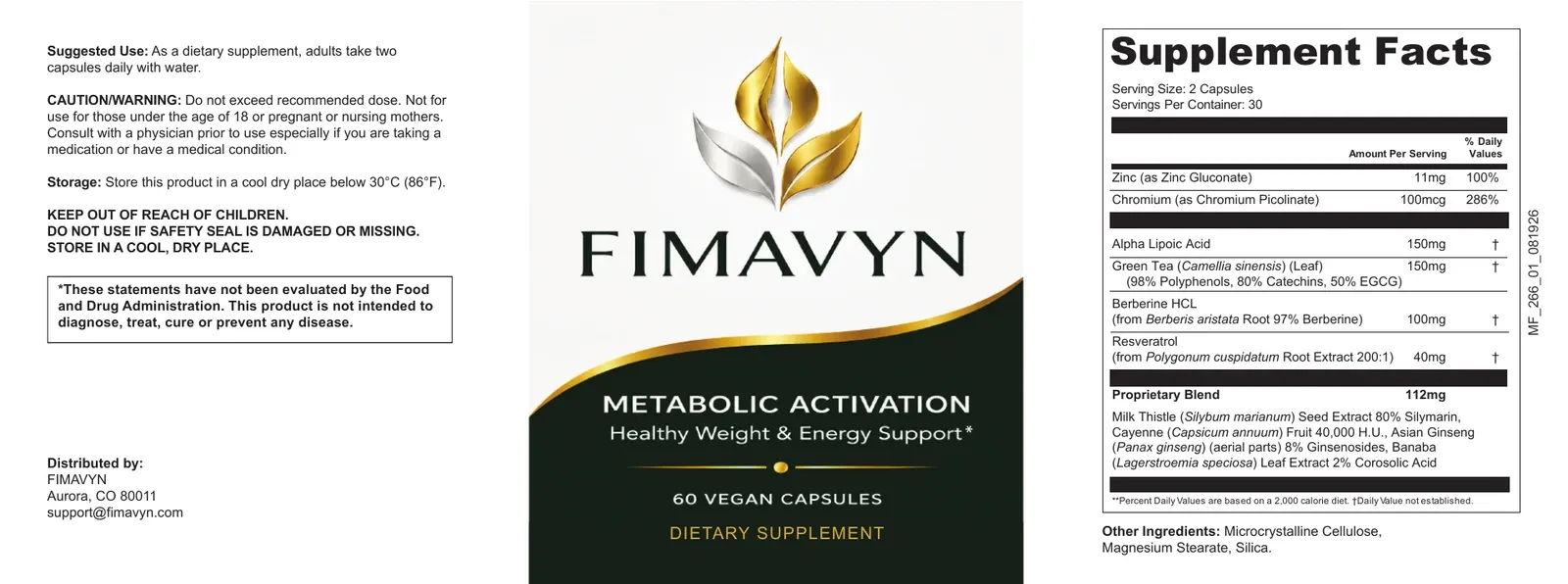
Its green tea extract gives about 75 mg of EGCG, far below the 800 mg a day linked to liver enzyme rises (EFSA, 2018). Its resveratrol, at 40 mg, falls in the dose group that showed no glucose change.
The meter below plots every line against its research range. The ingredients page explains each one, and the buyer’s checklist shows how to run the same test on any label.
The 11 mg line covers a full day's zinc need, with plenty of room under the 40 mg ceiling. Sources: (NIH ODS, 2026)
Just under the lowest studied amount; even full doses moved weight by roughly half a kilo to a kilo. Sources: (Onakpoya et al., 2013) (Tian et al., 2013)
One quarter of the smallest study dose. Sources: (LPI, n.d.) (Kucukgoncu et al., 2017)
Roughly 120 mg catechins and 75 mg EGCG by our math, a tenth of the 800 mg EGCG level linked to liver enzyme rises. Sources: (Jurgens et al., 2012) (EFSA, 2018)
About 97 mg after the 97% purity, close to one tenth of a typical trial day. Sources: (Wang et al., 2024) (Dong et al., 2012)
40 mg sits in the low-dose group where fasting glucose did not change. Sources: (Zhu et al., 2017) (LPI, n.d.)
Its share of the 112 mg blend is not printed, so no comparison is possible. Sources: (Whiting et al., 2014)
Blend share not printed; the human studies behind it were small and brief. Sources: (Miura et al., 2012)
Fimavyn amount dose range used in human studies (log scale)
Metabolic support supplements: common questions
Questions people type into Google and Bing, answered from the label and the sources on this page.
What is a metabolic support supplement?
It is a dietary supplement whose label talks about supporting normal metabolism, weight or energy. Those are structure/function claims, which FDA does not pre-approve and which must carry its disclaimer (FDA, 2024).
How much weight did people lose on chromium or alpha lipoic acid in studies?
Very little. Chromium beat placebo by about 0.5-1.1 kg (Onakpoya et al., 2013) (Tian et al., 2013), and alpha lipoic acid by about 1.27 kg in short trials (Kucukgoncu et al., 2017).
Which metabolic ingredient has the most blood sugar research?
Berberine has the largest pool. A 2024 review of 50 trials in type 2 diabetes found it lowered fasting glucose by about 0.59 mmol/L, mostly at 0.9-1.5 g a day (Wang et al., 2024).
Does resveratrol lower blood sugar?
Only in some studies, and only at higher doses. In type 2 diabetes, fasting glucose dropped at 100 mg a day or more, and HbA1c did not change (Zhu et al., 2017).
Does capsaicin from cayenne burn calories?
A little, mainly at high doses (Ludy et al., 2012). Capsaicinoids taken before a meal cut about 74 calories at that meal, but body weight was not measured (Whiting et al., 2014).
Is milk thistle useful for blood sugar?
The evidence is limited. NCCIH says it may help blood sugar in type 2 diabetes, is usually well tolerated, and can cause allergy in people sensitive to ragweed (NCCIH, n.d.).
Can a supplement stand in for diabetes medicine?
No. NCCIH says supplements should never replace diabetes treatment, and several common ones can interact with it (NCCIH, n.d.).
Why don't diabetes trial results apply to everyone?
People with high blood sugar have more room to improve than people with normal levels. A drop seen in type 2 diabetes may be smaller, or absent, in healthy adults.
Are natural metabolism products always safe?
No. Natural does not always mean safe, supplements can interact with medicines, and some weight-loss products have contained hidden drugs (NCCIH, n.d.).