What Are the Ingredients in Fimavyn? Seven Label Lines Checked One by One
Written by the GoFimavyn editorial desk · Medically reviewed by Dr. Fatima Cody Stanford, MD, MPH, MPA, MD, Physician
Last updated · Review date: · Who reviewed this page · How we write and review
The Fimavyn label has seven lines per two capsules: zinc 11 mg, chromium 100 mcg, alpha lipoic acid 150 mg, green tea extract 150 mg, berberine HCl 100 mg, resveratrol 40 mg and a 112 mg blend of four herbs. The blend gives no single amounts. These are vegan capsules, not drops or gummies.
Line 0: What is the serving size and what form is Fimavyn?
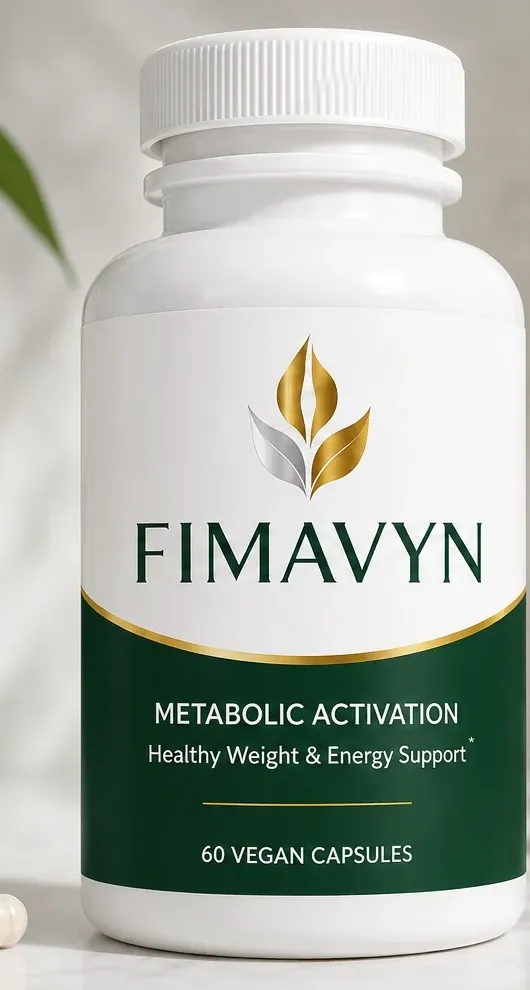
Before the lines, read the top of the panel. The serving size is 2 capsules. One bottle holds 60 capsules, which is 30 servings. The label says the capsules are vegan.
You may see searches for Fimavyn drops, gummies or pills. The label does not describe drops or gummies. It describes capsules. If a page sells another form under this name, check it against the bottle.
The directions on the label read: "As a dietary supplement, adults take two capsules daily with water." The label also says not to exceed the recommended dose.
Lines 1 and 2: What do the zinc and chromium lines say?
These are the only two lines with a Daily Value. Zinc is 11 mg (as zinc gluconate), which is 100% of the Daily Value. Chromium is 100 mcg (as chromium picolinate), which is 286%.
The 286% looks large. The math is simple: the Daily Value for chromium is 35 mcg, and 100 divided by 35 is about 2.86. A figure over 100% does not by itself mean too much. NIH lists no set upper limit for chromium (NIH ODS, n.d.), and zinc at 11 mg sits well under the 40 mg adult upper limit (NIH ODS, 2026).
Count zinc from other pills too. A multivitamin may add more.
Line 3: How much alpha lipoic acid is in Fimavyn?
The label lists 150 mg of alpha lipoic acid, an antioxidant fatty-acid compound. There is no Daily Value for it.
Studies used 600 to 1,800 mg a day (LPI, n.d.). So 150 mg is one quarter of the smallest study dose. A pooled review of short weight trials found about 1.27 kg of extra loss (Kucukgoncu et al., 2017), at doses larger than this.
Alpha lipoic acid has been linked to low blood sugar and to a rare condition called insulin autoimmune syndrome (MSKCC, n.d.). That is a reason to speak with your doctor if you use insulin or diabetes pills.
Line 4: What does the green tea line mean in milligrams?
The label says 150 mg of green tea leaf extract (Camellia sinensis) with 98% polyphenols, 80% catechins and 50% EGCG. Multiply 150 mg by each percent and you get the real amounts.
| Layer | Label percent | Milligrams per serving |
|---|---|---|
| Whole extract | 100% | 150 mg |
| Polyphenols | 98% | about 147 mg |
| Catechins | 80% | about 120 mg |
| EGCG | 50% | about 75 mg |
A European safety panel saw liver enzymes rise at 800 mg of EGCG a day or more (EFSA, 2018). About 75 mg is far under that. Green tea extract is still a rare cause of liver injury (LiverTox, 2020). The label does not state how much caffeine the extract keeps.
Line 5: How much berberine do you really get?
The label says berberine HCl 100 mg, from Berberis aristata root, 97% berberine. Take 97 percent of 100 mg and you land on 97 mg. So a serving gives about 97 mg of berberine.
A 2024 review pooled 50 trials in type 2 diabetes. Doses mostly ran 900 to 1,500 mg a day (Wang et al., 2024). The Fimavyn amount is close to one tenth of that range.
Berberine is not for use in pregnancy or breastfeeding, and it can interact with many drugs (MSKCC, n.d.). Our worth-it checklist puts the small dose in context.
Line 6: What is the resveratrol line, and is 40 mg a lot?
The label lists 40 mg of resveratrol from Polygonum cuspidatum root extract, with a ratio of 200:1. That ratio describes how concentrated the root extract is.
Studies of resveratrol used between 8 and 3,000 mg a day. In people with type 2 diabetes, fasting glucose moved only at 100 mg a day or more (Zhu et al., 2017). Fimavyn is below that mark.
At high doses, resveratrol may add to the effect of blood thinners (LPI, n.d.). 40 mg is a modest amount, but it is still worth a word with your doctor if you take one.
Line 7: What is inside the 112 mg proprietary blend?
Four herbs share the last line: milk thistle, cayenne, Asian ginseng and banaba. The label gives their combined weight, 112 mg, and a strength figure for each. It does not give the weight of any single herb.
| Herb | Part and standard on the label | What the amount tells you |
|---|---|---|
| Milk thistle | Seed extract, 80% silymarin | Herb weight not published |
| Cayenne | Fruit, 40,000 H.U. | Herb weight not published |
| Asian ginseng | Aerial parts, 8% ginsenosides | Herb weight not published |
| Banaba | Leaf extract, 2% corosolic acid | Herb weight not published |
Because each share is unknown, none of the four can be set beside a study dose. That is why the label shows seven lines but ten named actives: six single lines plus four blend herbs.
The label does not say why the amounts are held back.
What else is in the capsule besides the actives?
The label closes with three fillers: microcrystalline cellulose, magnesium stearate and silica. They help fill the capsule and keep the powder flowing. They are not actives.
Key facts
- Seven label lines per two capsules; ten named actives in all
- Vegan capsules; no gluten-free claim is made on the label
- No caffeine line on the panel; the caffeine in the green tea extract is not stated
- Storage: cool, dry place below 86°F (30°C), out of reach of children
- Not for anyone under 18, or for pregnant or nursing mothers
Nobody has run a clinical study on the finished capsule. The research cited here covers single ingredients, mostly at higher doses.
Frequently asked questions
What is inside a Fimavyn capsule?
Per two capsules: zinc 11 mg, chromium 100 mcg, alpha lipoic acid 150 mg, green tea extract 150 mg, berberine HCl 100 mg, resveratrol 40 mg and a 112 mg blend of milk thistle, cayenne, Asian ginseng and banaba.
How many milligrams of berberine does Fimavyn have?
The label lists 100 mg of berberine HCl at 97% berberine, so about 97 mg per serving. Most diabetes trials used 900 to 1,500 mg a day.
Does Fimavyn come as drops or gummies?
The label describes vegan capsules, 60 per bottle. It does not describe drops or gummies, so check any other form against the bottle.
Why are four Fimavyn herbs listed without amounts?
They share one proprietary blend of 112 mg. A blend label shows the total weight, not the share of each herb. The label gives no reason.
Are Fimavyn capsules gluten-free?
The label says the capsules are vegan. It makes no gluten-free claim, so that is not confirmed. Ask the order desk if you must avoid gluten.
Does Fimavyn contain caffeine?
No caffeine line is printed on the panel. The green tea extract may keep some caffeine, but the amount is not stated.
What are the main Fimavyn ingredients?
Per two capsules the label lists zinc 11 mg, chromium 100 mcg, alpha lipoic acid 150 mg, green tea extract 150 mg and berberine HCl 100 mg, plus a blend shown by total weight.
Why are some Fimavyn herbs listed without amounts?
They sit in a proprietary blend, where only the total weight is printed, not each amount. That means you cannot compare single herb doses with study doses from the label alone.
Our view
The label is more open than many in this category. Six lines print exact amounts, and the plant extracts show strength figures. That lets you do your own math, as we did above.
The same math shows small doses for berberine and alpha lipoic acid, and four herbs with no published amounts. Nobody has tested the finished formula.
Read the panel on your own bottle, match it to the table above and show it to your doctor if you take medicine. Fimavyn is a dietary supplement. It is not FDA approved, and it is not a drug.
Last updated November 18, 2026. Medically reviewed by Dr. Fatima Cody Stanford, MD, MPH, MPA, MD, Physician.